Restorative Care Programs
Restorative care supports greater mobility and independence in individuals with musculoskeletal conditions and other pathologies that have negatively affected movement control. Verland provides a wide range of services for supporting the quality of life of Sewickley-area residents with respite care, adult training, rehabilitation, lifesharing programs, and more. At our Sewickley Campus, our team of restorative care aides and specialists provides personalized rehabilitative treatments to help individuals restore and maintain independent function. Learn more about our compassionate restorative care services and schedule a consultation with us to move forward with restorative care programs for you or a loved one.
What Restorative Care Supports
Restorative care supports patients who need assistance maintaining or regaining mobility and functional capacity following an illness or injury or following a chronic condition diagnosis. For example, seniors experiencing dexterity or functional decline in daily living tasks, seniors with neurological conditions like dementia and Parkinson’s, or individuals recovering from a hip replacement surgery. Individuals with these conditions or in these circumstances benefit from direct, targeted therapies designed to restore functioning movements. The core focus is improvement and then maintenance of restored physical capacity, not managing dependencies or maintaining quality of life around reducing mobility or dexterity.
At Verland’s Sewickly Campus, our restorative care treatments are designed to support the following goals and areas of concern:
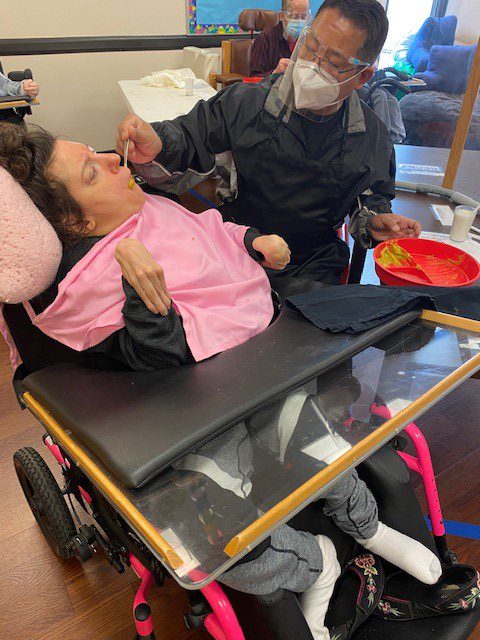
- Daily living activities (DALs), including bathing and grooming, eating, and dressing
- Functional training, including safe medication management, meal preparation, and cleaning
- Working with adaptive equipment like walkers or wheelchairs
- Mobility and strength programs to restore balance, walking strength, and a comfortable range of motion
Patients and staff collaborate to determine and complete plans for rehabilitation services. We also provide activities to help patients manage their mental and emotional health through games and social interactions.
How Restorative Care Is Delivered at Verland
Verland has developed a robust restorative care program at our Sewickley Campus, where aides provide therapies using therapeutic medical equipment to help patients restore and improve skills like walking, manipulating tools and materials, and balancing. As part of our restorative care therapies, we also monitor for signs of emerging or progressing musculoskeletal conditions to provide fast interventions and minimize the risk of loss of function.
Restorative Care in Our Adult Training Facility Classrooms at Sewickley Campus
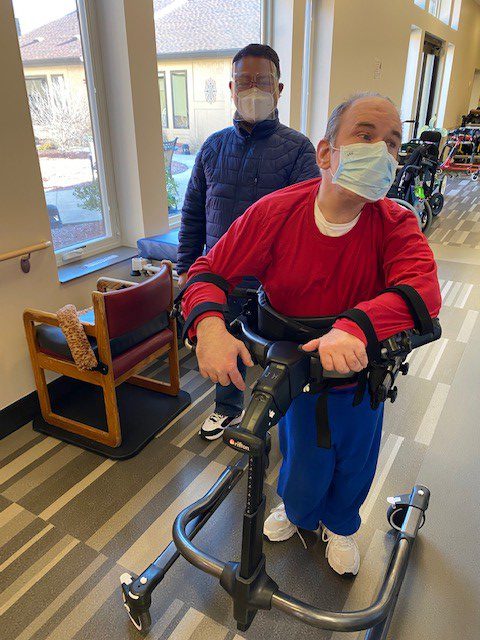
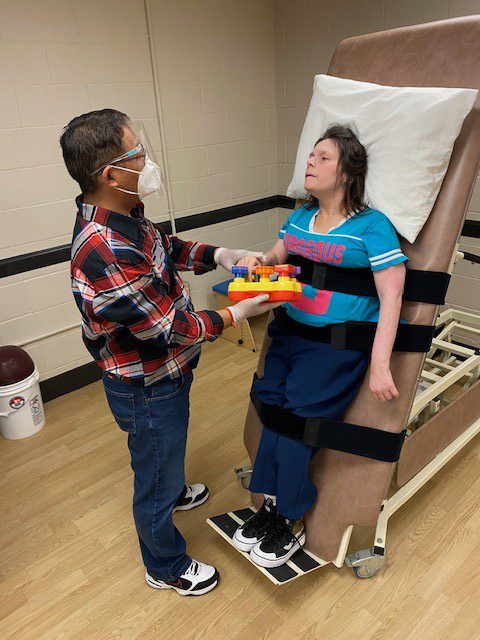
The Restorative Care Aides dovetail skilled rehabilitative treatments with functional, maintenance-based interventions. Our Aides are trained to use various pieces of therapeutic and durable medical equipment to address skill-based goals, such as standers, mat tables, tilt tables, gait trainers, and durable medical equipment. Once individuals achieve a desired level of independence in function, such as walking, self-feeding, dressing, or balancing, Restorative Care aims to maintain such client function and quality of life. In addition to carrying over skilled clinical therapies, Restorative Care is very helpful in identifying and remediating emerging musculoskeletal conditions before they adversely affect function.
Restorative Care may be provided in the Adult Training Facility classrooms, in the individual’s home, or in the dedicated therapy spaces. Programming consists of assisting individuals with passive and active range of motion of both upper and lower extremities. This intervention approach leads to emotional and physical benefits, as range of motion improves muscle lengthening, blood circulation, and positioning. In addition, individuals receive one-to-one attention and meaningful engagement in function-based tasks. Individuals love moving with the staff and developing various skills, like riding modified bikes, completing vocational tasks, and fine-tuning gross and fine motor skills through games. Restorative Care has proven effective for individuals who are ambulatory, semi-ambulatory, and mobilize via wheelchair.
Restorative Care Within Residential Living
Our Sewickley ATF campus is the base of our restorative care services, and it’s home to the residents of our Intermediate Care Facility (ICF), a comfortable living community designed for individuals on the severe end of the Intellectual and Developmental Disabilities (IDD) spectrum. At this campus, we provide residential services, integrated programming, sensory therapy, and more.
Verland operates several locations offering different services for our patients, including an under-construction residential living community in Venango County called Verland North, soon to be home to four Signature Homes for comfortable residential living that can increase seamless access to restorative care therapies and additional services.
Learn More About Verland Programs
Verland is committed to providing compassionate health and disability services to residents and patients who come to Verland to restore and improve their mobility, capacity for daily living activities, walking, and other physical skills. Our organization believes that all human beings should have dignified living, and we provide compassionate, enriching care to give our patients access to stability, choice, control, and independence. Reach out to our teams today to learn more about our restorative care therapies and programs at our Sewickley campus, or ask about our full range of services, treatment options, and residential living services.
Apply to Our Services
severe/profound intellectual and physical disabilities.