
Music Therapy Programs at Verland’s Sewickley Campus
Music Therapy is an established health profession in which music is used within a therapeutic relationship to address the physical, emotional, cognitive, and social needs of individuals.
At Verland, we believe that communication transcends words. For many of the individuals we serve, music provides a vital bridge to self-expression, emotional regulation, and social connection. Our Music Therapy program is not merely an activity; it is a clinically significant component of the holistic, 24-hour care provided at our Sewickley campus. By integrating rhythmic and melodic interventions into daily life, we help individuals with complex physical and intellectual challenges unlock new ways to interact with the world around them.
What Music Therapy Supports for Special Needs Adults
Music therapy at Verland’s Sewickley campus is specifically designed to address the multifaceted needs of individuals with significant disabilities. Because music engages almost every area of the brain, it serves as a powerful tool for rehabilitation and personal growth.
Research in music therapy supports its effectiveness in many areas, such as overall physical rehabilitation and facilitating movement, increasing people’s motivation to become engaged in their treatment, providing emotional support for clients and their families, and providing an outlet for expression of feelings.
– American Music Therapy Association (AMTA)
Our Board-Certified Music Therapists build upon this research to support several key developmental areas for the individuals we serve:
- Sensory Processing & Integration: For individuals with sensory sensitivities, structured musical environments help regulate responses to external stimuli.
- Non-Verbal Communication: Music Therapy also provides avenues for communication that can be helpful to those who find it difficult to express themselves in words.
- Physical Coordination: Rhythmic Auditory Stimulation (RAS) can assist in motor planning and Habilitation goals, helping the individuals we serve improve their range of motion and coordination.
- Cognitive Focus: Through structured melody and rhythm, we help individuals enhance their attention spans and cognitive processing speed.
Who Receives Music Therapy at Verland
Our Music Therapy services are tailored specifically for disabled adults and individuals with complex intellectual challenges who reside within our Sewickley community. This specialized care is an integral part of the Individualized Program Plan (IPP) developed for each individual.
It is important to emphasize that the direct, on-site Music Therapy services are exclusively available to the individuals living on our Sewickley campus. We do not provide outpatient or “at-home” services to those living off-site. Our mission is focused on providing a total-immersion support system. By centering our clinical and residential services within this single location, we ensure that every resource is dedicated to the safety and progress of the individuals living within our campus homes. This allows us to maintain a rigorous standard of 24-hour holistic support that simply cannot be replicated in a traditional home-care setting.
How Music Therapy is Delivered at Verland
The strength of the Verland model lies in our on-site continuity. Unlike a traditional community-based model where services are scattered, our Sewickley location provides a centralized, structured, and highly specialized model of care.
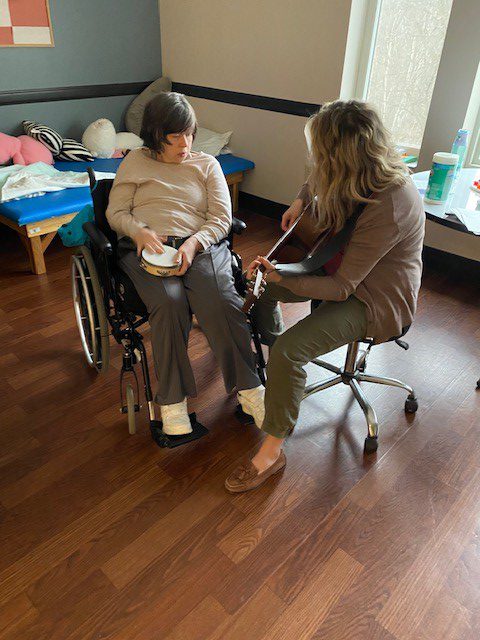
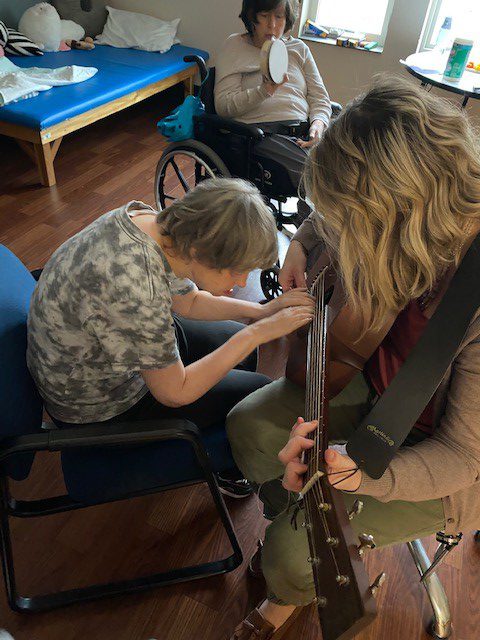
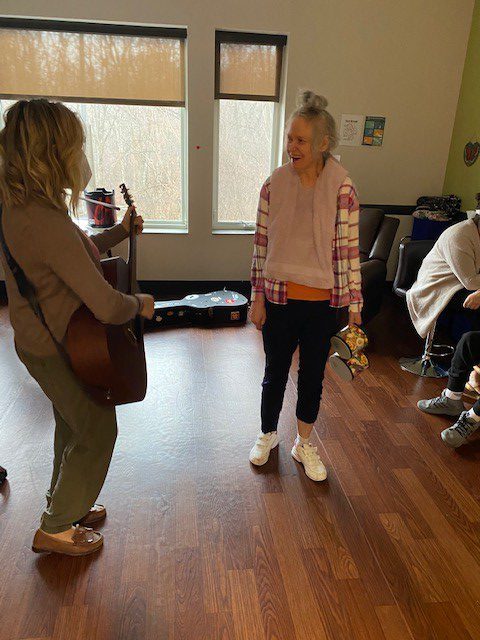
To initiate services, our Board Certified Music Therapist completes a formal assessment, within a group setting or on an individual basis, according to need. Our therapist then crafts goals for such interventions including, but not limited to, music and relaxation, movement to music, active music-making with hand percussion and singing, and musical motivation for participation in daily routines.
After assessing the strengths and needs of each client, the therapist provides the indicated treatment, including creating, singing, moving to, and/or listening to music. Through musical involvement in the therapeutic context, clients’ abilities are strengthened and transferred to other areas of their lives.
All follow-up treatment sessions are goal-oriented and individual-specific to allow for maximum participation; treatments are conducted in collaboration with our staff, other therapists, friends, peers, and family members within our Adult Training Facility, in the home or in the clinic. Our therapist strives to positively connect our individuals with others through music, facilitate engagement in meaningful and purposeful tasks, and improve quality of life.
This “in-house” model means that there are no gaps in communication and no delays in care. Because our therapists work directly alongside our Nursing and DSP teams, the therapeutic goals are reinforced 24 hours a day, 365 days a year. If a clinical need arises, the experts are already here. If a daily living plan needs adjustment, the team meets right on the grounds. This structure provides a sense of safety and stability that allows the individuals we serve to flourish in a predictable, high-support environment.
Support Our Verland Programs Today
Maintaining a 24/7 clinical campus requires more than just dedication; it requires the generous support of our community. Your contributions allow us to upgrade our specialized equipment, enhance our on-site facilities, and ensure that the Sewickley campus remains a gold standard for care.
Make a Difference Today. We invite you to be a part of our mission. Your gift directly impacts the lives of the individuals we serve, providing them with the safety, dignity, and specialized care they deserve.
Apply to Our Services
severe/profound intellectual and physical disabilities.